Body Fat Calculator (US Navy & BMI Methods)
Estimate your body fat percentage, lean muscle mass, and fat mass using the validated US Navy circumference method. View standard fitness classifications and essential fat thresholds.
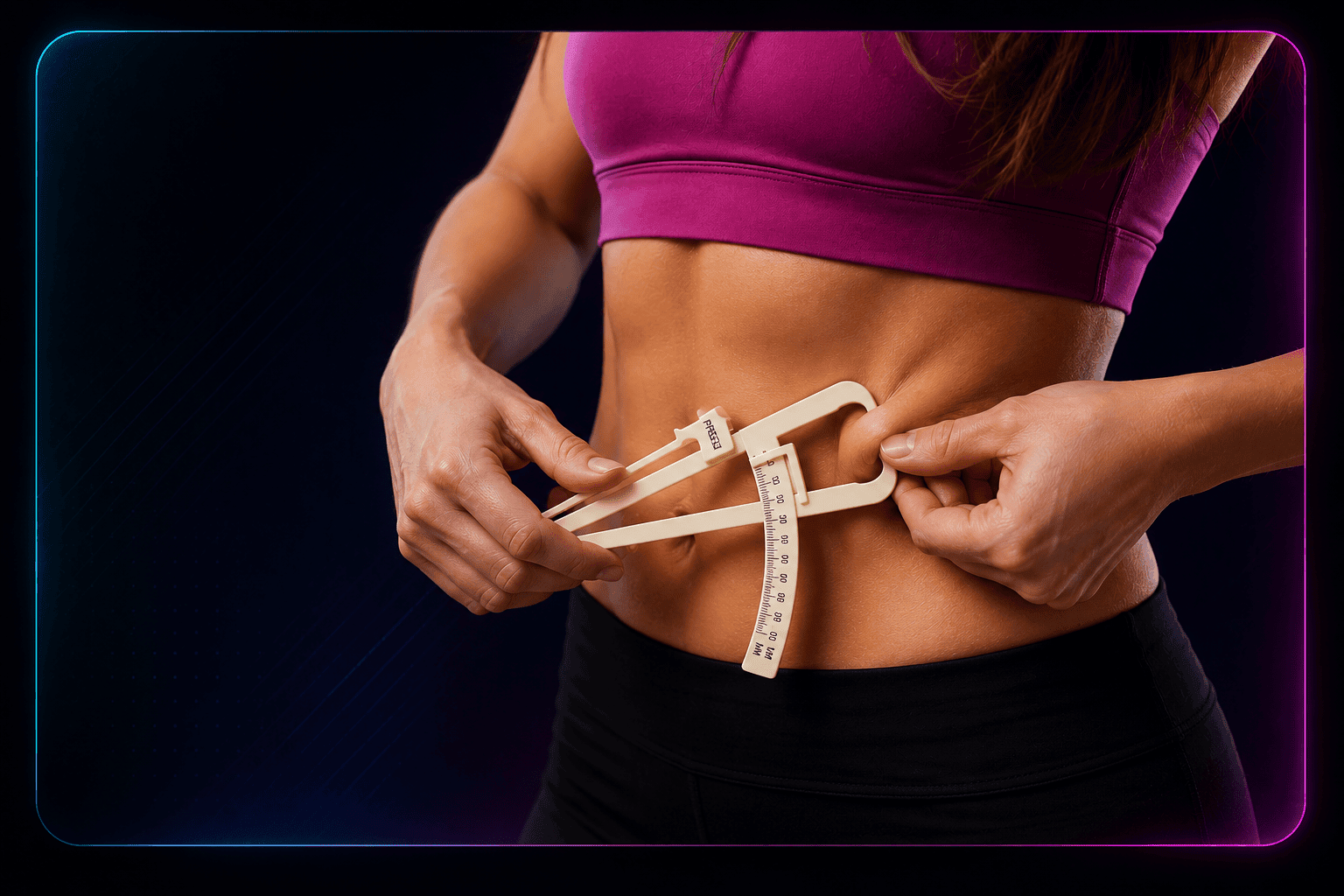
The US Navy Circumference Method Explained
The US Navy Body Fat equation is an anthropometric calculation protocol developed by Naval Health Research Center researchers Hodgdon and Beckett in 1984. It relies on natural anatomical circumference ratios—specifically comparing the neck, abdominal waist, and hips (in females) against stature height—to determine body density and calculate body fat percentage.
Why Circumference Outperforms Simple Scale Weight
Standard bathroom scales measure gross gravitational mass, failing to differentiate between adipose tissue, intracellular water, skeletal mass, and skeletal muscle tissue. Two individuals of identical height and weight (e.g. 180 cm and 85 kg) may present drastically different physique profiles:
- An athletic strength trainer may possess a 12% body fat level with 74.8 kg of lean body mass.
- A sedentary individual may possess a 28% body fat level with 61.2 kg of lean mass and 23.8 kg of excess adipose tissue.
Tracking circumference-derived body fat ensures that your weight loss efforts represent genuine lipid catabolism rather than dehydration or muscular atrophy.
Mathematical Formulas (US Navy Equations)
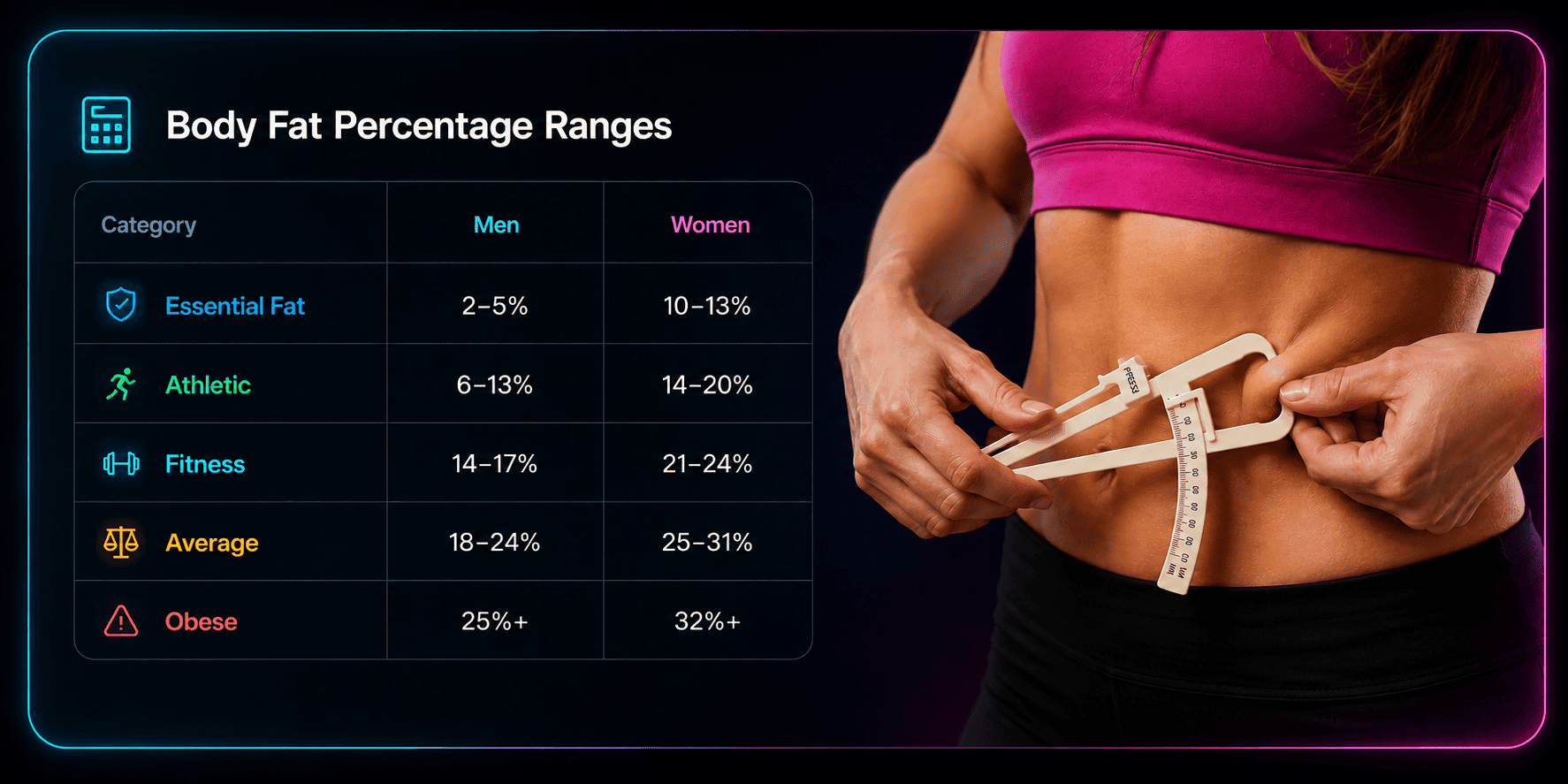
Standard Body Fat Classifications (ACE Guidelines)
| Category | Men (% Fat) | Women (% Fat) | Description |
|---|---|---|---|
| Essential Fat | 2% – 5% | 10% – 13% | Minimum lipid mass required for neural insulation, hormone signaling, and organ protection. |
| Athletes | 6% – 13% | 14% – 20% | Typical of competitive athletes, sprinters, gymnasts, and natural bodybuilders. |
| Fitness | 14% – 17% | 21% – 24% | Optimal aesthetic conditioning with visible vascularity and strong metabolic markers. |
| Average (Acceptable) | 18% – 24% | 25% – 31% | Standard healthy civilian population range with low risk of metabolic syndrome. |
| Obese | ≥ 25% | ≥ 32% | Associated with elevated risks of dyslipidemia, cardiovascular strain, and type 2 diabetes. |
How to Take Precise Measurements
Measurement error is the most common cause of inaccurate body fat estimates. Follow these clinical protocols:
- Neck: Place the measuring tape horizontally around the neck, positioning it directly below the laryngeal prominence (Adam's apple). Keep shoulders relaxed and do not look upwards or downwards.
- Waist: For men, measure horizontally at the level of the navel. For women, measure at the narrowest point of the torso (typically 2–3 cm above the navel). Take the reading at the end of a normal, relaxed exhalation without pulling the tape tight enough to indent soft tissue.
- Hip (Women): Stand with feet together and measure horizontally around the maximal circumference of the buttocks.